By Nzubechi Maduagwu
From the perspective of a southeast youth.
After the 2023 elections, there was a push for a coalition. Everyone identified that it would be important for the opposition to come together to beat and remove President Tinubu from office. This call became even more pressing after the first 18 months of Tinubu’s administration as Nigerians faced severe economic hardship.
Mr. Peter Obi (a man whom I admire a great deal) was among the top three leaders with presidential ambitions who were in discussions for the coalition; others included Atiku Abubakar and Rotimi Amaechi. Other leaders who pushed for this coalition included Emeka Ihedioha, Mallam Nasir El-Rufai, Liyel Imoke, and Aminu Tambuwal, to mention a few. What stood out was that it seemed like Obi was dragging his feet; he was being chased down prominently by Emeka Ihedioha and Liyel Imoke from Nigeria to the UK, as was reported.
Even after Obi agreed to join the party, he stalled to the extent that the former governor of Kaduna State, Nasir El-Rufai, called him out publicly during an ADC rally in Kaduna State to join the ADC as agreed. In that statement, El-Rufai boldly claimed that the two of them had agreed with the leadership of the party to move after the off-cycle/bye-elections were held in their respective states (Kaduna and Anambra) and that Obi should make hay while the sun shines.
In late December 2025, Mr. Obi was given a hero’s welcome into the ADC in Enugu, organized by members of the party hierarchy in the Southeast. He declared for the party, saying that this would be the vehicle to dismantle Tinubu’s grip on our nation. For many like me, we were thrilled. Finally, the man we were waiting for.
Now, while Obi joined, he made some demands that certain positions in the party leadership should be given to his associates so he could feel safe in the party, and these were done. An example was the position of the National Organizing Secretary; another is the position of the Deputy National Publicity Secretary. It’s important to mention that the person in charge of organizing the party primaries is the National Organizing Secretary, which means Obi was in good hands, installing his associate there to the scorn of his fellow contestants.
As the pressure in the polity progressed, Mr. Obi’s associates started pushing the idea of the turn of the South, and Mr. Obi himself started talking about “well-conducted primaries.” I don’t have an issue with well-conducted primaries, but the turn of the South? My question is: which South? It is the same issue I had with Wike’s argument in the PDP. Which South is in question? The Southwest has done 8 years before as president, 8 years as vice president, and another 4 years now that President Tinubu is in office. So when Obi makes the argument for the turn of the South, which South does he speak of? Does that mean that if Rotimi Amaechi, who is from the South-South, had emerged as the candidate, he wouldn’t run? (Lol, of course not.) Also, the South-South has ruled for 5 years. Or is he saying it should be micro-zoned to the Southeast?
Instead of building the party structures of the ADC in his image across the states he won in the 2023 elections so he could use those numbers to clinch the ticket during the primaries, Mr. Obi kept saying, “I must be on the ballot,” while every state he won has no structure aside from Imo, whose structure was built up due to Emeka’s ambition to be governor come 2028. The rest were languishing and bleeding out due to a lack of leadership from Obi. In contrast, Rivers has twice the registration numbers of Anambra (Obi’s home state), Adamawa ranks competitively, and Kaduna takes the crown in terms of member registration. This means if push came to shove in the ADC primaries, Obi would have lost fair and square.
So why was he screaming about transparent direct primaries without putting in the work at home? While other candidates were busy building up structures in their states and other states where they had interests, Obi was moving around with Southeast elders, allegedly pleading with those whom they were consulting to implore Atiku and Amaechi to step aside for him to run as the flag bearer, or at least zone the ticket, which was not set in stone at the time the coalition was birthed.
Now according to my calculations, it would have been better if Obi had shown strength by building up his structures. This would have also helped his own hand-picked down-ballot candidates win their tickets in the ADC too, but I would later come to find out that he didn’t care about that either. While leaving the ADC, he abandoned his political followers like GRV, whom he had even told to join the ADC ahead of him. He left without informing GRV. As I write this, his new party is conducting primaries and his own followers, like Aisha Yesufu and co., are being denied tickets. And through what? Consensus! Well, what is good for Obi is good for other people, right? But if he had built his structures in the ADC, he would have had the chance to get the ticket, and all his political sons and daughters like GRV, Aisha Yesufu, Morris Monye, and others would have clinched the tickets of the ADC and carried on his political legacy. But Obi seems unable to see beyond himself.
Furthermore, let’s look into the “Igbo question.” Peter Obi talks about the “turn of the South” and also talks about the fact that he will serve for only 4 years. Now, while his supporters claim that he is not an Igbo project and that he represents a national drive rather than an Igbo mandate—and I agree with them—if he does 4 years, won’t it be recorded that Igbos have ruled Nigeria for 4 years? Wouldn’t it be expected that the agitation for the inclusion of Igbo people in national politics should die a natural death because, after all, we have had a shot at the presidency? So my question is, why should a people who have been marginalized for over 60 years have a shot at the presidency only for it to be for 4 years alone? Also, after an Igbo man rules, when Igbo people complain of projects that should have been done, they will be asked, “Was your brother not president? Why didn’t he do it?”
The Southeast question
Let’s dive into that. What the Southeast lost and what it needs cannot be done in 4 years. The Southeast needs a standard-gauge rail running through the region just like it is being done in other places. It cannot be achieved in 4 years. It took Buhari 8 years to do both Lagos-to-Ibadan and Warri-to-Itakpe. Obi wouldn’t want to position himself as someone who is tribalistic. If you have listened to him, you will rarely hear anything about what he will do in the East; you will only hear, “I will do this in the North,” “the North is the key to so-and-so,” or “if we do this in Niger State.” I sincerely believe that his 4 years will be spent trying to prove that point while ignoring the East.
Why an Atiku Abubakar Presidency?
Everyone has asked me this. The funny thing is that my former principal (Obi) sold this same man to us. They even have the same economic principles and steps, and agree on the most important values. Obi actively sold this man in 2019 and hasn’t gone back on his word since. Today, he has only said he wants to carve his own path, and I wish him well too. So to my friends reading this: if you believe that Obi stands for principle and the right things, it means his stance on Atiku then was right and is still right.
You may ask, why are you supporting a corrupt man? Please, how is Atiku corrupt? For those who will go further to say he sold Nigeria’s assets to his friends or that he stole money meant for electricity (at least those who even try to read), can you mention the friends he sold them to? People give credit to Obasanjo for bringing in MTN and executing a telecom reform that turned Nigeria into a country with high internet penetration and a thriving fintech sector. But the man who chaired and oversaw the sale of NITEL and the issuance of licenses to companies like Airtel, MTN, and co. is ATIKU! You blame him for selling assets but give credit for the results of those sales and license issuances to OBJ; pick a side.
The same goes for power. You say he stole the money for power—$16 billion, you claim. But that same person spearheaded the construction of 12 power plants, with two in the Southeast. From then until now, there has been no major investment by the federal government into power plants, especially in the Southeast. This took Nigeria’s power generation from a meager 2,000 MW to 13,000 MW in terms of capacity. Look at his reforms in our oil and gas sector where our refineries were sold to consortiums that would have made them work, but Yar’Adua reversed those sales. Till today, those refineries aren’t working, just like NITEL would have been redundant.
There’s more, but I will stop here. Despite all the corruption allegations, Yar’Adua took Atiku to court looking for a conviction, but he was vindicated by that same court in 2009 and all charges were dropped. You can read about it here: https://www.voanews.com/a/a-13-2006-11-30-voa7/314274.html
So where is the corruption, actually? What exactly has the man done? You say he sold assets to his friends—who are those friends? Can you name them?
Looking at political calculations, Atiku Abubakar has always carried a national interest. To me, I have seen his particular liking for an Igbo/Southeast interest in that, in all his presidential runs, he has always picked a Southeast running mate and has always supported a Southeast presidency. In fact, he is well known to have pushed for the micro-zoning of the 2022 PDP primaries to the Southeast, which the Ortom-led (Wike-influenced) zoning committee rejected and declared open for everyone.
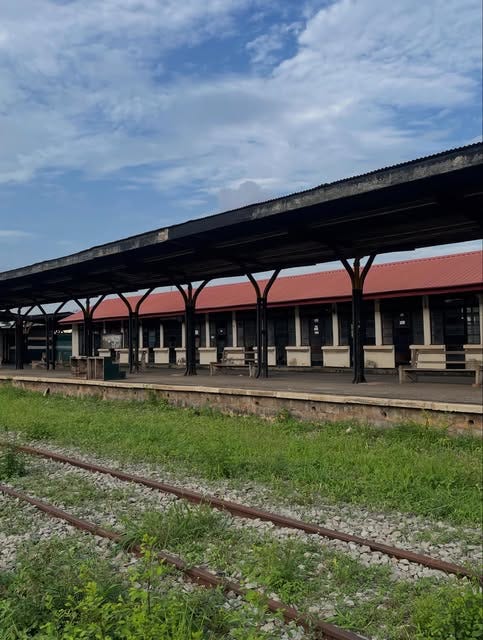
Aside from this, Atiku is from the Northeast, and his state and business interests lie on the eastern economic corridor: Port Harcourt (South-South)–Southeast–Northeast. This means if Atiku is developing this economic corridor, it benefits the Southeast as a whole. From Obasanjo till date, nearly every government has spent time developing the western economic corridor from Lagos to Sokoto. Buhari did the Lagos-to-Ibadan railway and commenced the Kano-to-Maradi railway, alongside the AKK gas pipeline which takes gas from the Southeast and South-South to power the Southwest and Northwest, leaving the Southeast, South-South, and Northeast economically desolate. Look at our rail today; you will weep! It is abandoned, disregarded, and a slap to our face.
That would change under an Atiku administration, and he would not be apologetic about it. We would see the Southeast and South-South fully integrated into the National Gas Master Plan because if he wants to get gas to the Northeast, it will definitely pass through the Southeast. The same goes for rail: the Port Harcourt-to-Maiduguri rail will receive full attention and will be upgraded to a standard-gauge railway with befitting stations, and the spurs into Owerri and other Southeast, South-South, and Northeast cities will benefit from this. This will radically boost the Southeast economy because development in Nigeria follows gas, rail, and port infrastructure.
Speaking of port infrastructure, did you know that Atiku’s biggest business venture is domiciled in Port Harcourt? This means for all the people who want ports in Port Harcourt and the eastern economic corridor to come online and function, a man who has business interests in that economic corridor understands exactly how vital it is, and he will make it happen. Unlike Obi, who will pander because he wouldn’t want to be seen as biased or bigoted, Atiku can do this and still retain national appeal, just like he did with the power plants. These steps will bring industrialization not just to one region or economic corridor, as we have seen so far, but to the eastern economic corridor as well.
I don’t want to leave Imo State for another state only to be told, “Go back to your state,” “Your region is unproductive, that’s why you boarded a night bus to our place,” or to be denied accommodation for being Igbo. No, I want Imo State gas to industrialize Imo State. I want to travel to Enugu by standard-gauge rail the same way other regions in Nigeria do. Obi won’t do that for the reasons I mentioned above, but Atiku will.
Succession plan
Atiku is from the Northeast, and if he picks a Southeast VP (just like he always has), the automatic successor after him would be that person, or at least that region! The alliance between Buhari and Tinubu reflects this reality of Nigerian politics. Yemi Osinbajo served as Tinubu’s pick for VP (representing the Southwest), and the Southwest (Tinubu) took over after Buhari finished his tenure (Northwest). Today, the Southwest will have done 12 years by the time Tinubu completes his tenure.
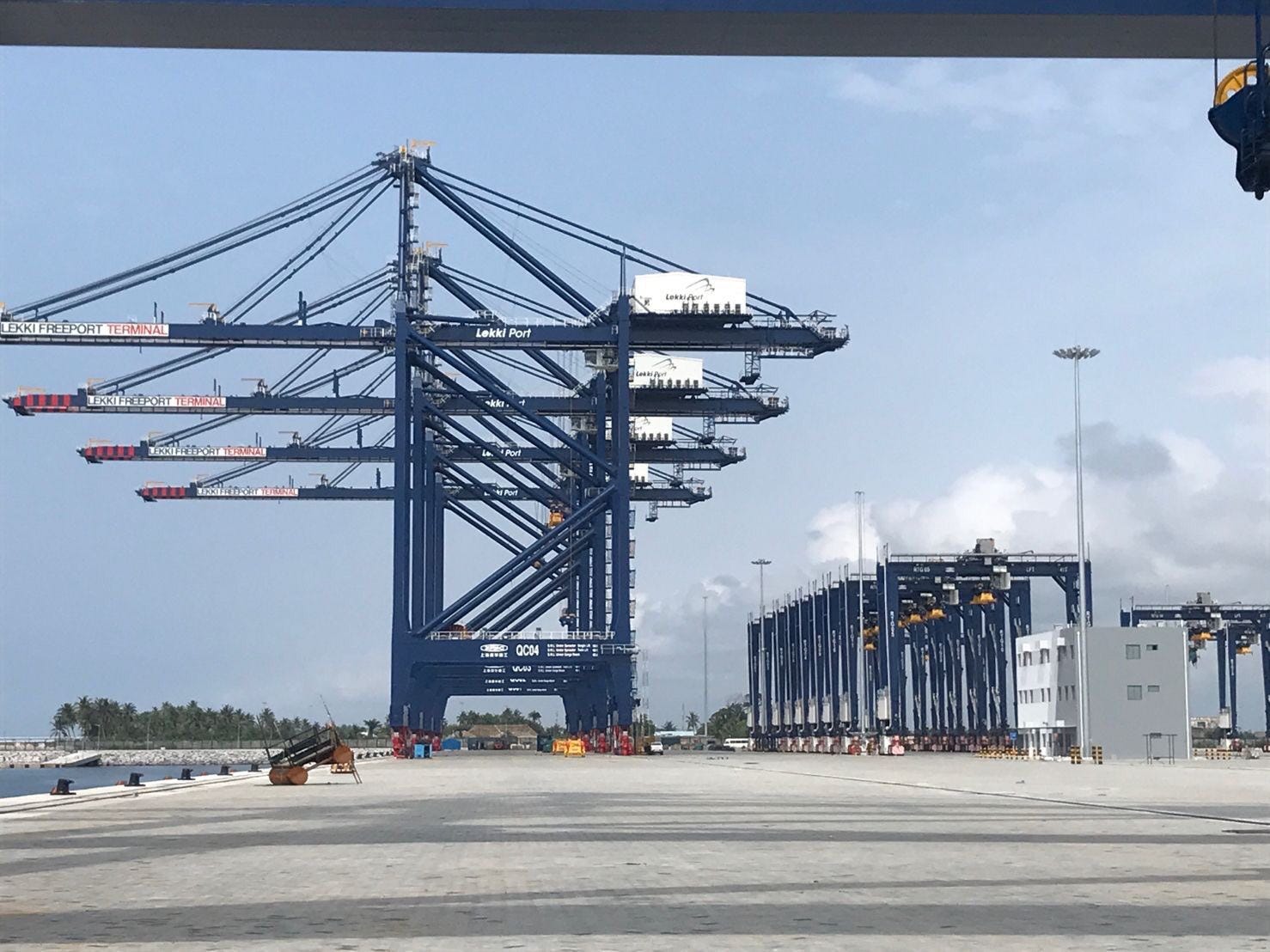
Look at what happened while Yemi Osinbajo served as VP: critical infrastructure went to his region, like I initially mentioned—the Lekki Deep Seaport, the Lagos-to-Ibadan railway (with about 4 mega stations), and other major infrastructure projects. Today, Tinubu is consolidating on that in his economic corridor with fully funded and backed projects like the Badagry Port, the refurbishment and reconstruction of Apapa and Tin Can Ports, the Lagos-to-Calabar Coastal Highway, and the Lagos-to-Sokoto Highway as well. In fact, he has allocated about 4 trillion Naira worth of projects to his own region and a meager 400 billion to the Southeast—and if you subtract the tax credit scheme overspills carried over from Buhari’s regime, it cuts down to 200 billion. In fact, as an Imolite, no federal road has been constructed for us by the federal government since 2015.
Ponder on this: all of these things will change with an Atiku presidency, and a successor of Southeast origin will consolidate them. It doesn’t mean other regions will be left behind, but it means the Southeast will get the equitable attention it deserves… Most importantly, the Igbo man who succeeds Atiku would do 8 years, not 4!
His Plans
Today, Atiku is promising that he will move power generation from 13,000 MW to 22,000 MW in 4 years, which is realistic knowing where we are financially as a country. (Nigeria is in heavy debt and cannot simply splurge.) Other candidates are over-promising and telling every Nigerian that they will get 24-hour electricity across the country in 4 years; that is unrealistic. He is the only candidate giving realistic solutions.
On restructuring, check all the manifestos from 2023. Atiku is the only person who has a comprehensive plan for restructuring Nigeria, giving resource control to states, and establishing state policing. I wish anyone reading this would go through that manifesto and also listen to his interviews about our economy. One is the NESG interview done for the three leading candidates in 2022, watch it with an open mind.
When it comes to economic management and prosperity, the path is clear. Atiku has the best plans instead of band-aid solutions. First is to cut the bloated Nigerian federal civil service by implementing the Stephen Oronsaye report to merge duplicated entities that perform the same functions; this will save Nigeria time and deregulate an over-regulated environment.
Also, he has touted the commercialization of the NNPC, which means the NNPC would become like the NLNG or if you don’t know about the NLNG, picture Saudi Aramco. This allows the federal government to focus on regulating the oil and gas industry unbiasedly instead of muddling the waters by being an active player in it. The Atiku administration would also review and sell the three NNPC-owned refineries in this country that have been undergoing repairs over and over again without producing a single barrel of refined product, despite the billions of dollars spent on them without success.
Atiku’s plan also involves using the proceeds of that sale to support private modular refineries, like the Waltersmith refinery in Imo State, to improve their capacity and churn out more refined products, crashing the price of petroleum products for ordinary Nigerians like you and me! Nobody else has these plans clearly outlined. Others will take the sentimental route of trying to fix the refineries for “national pride,” but Atiku will take the hard route and deconstruct the NNPC and these refineries, just like he did with NITEL. Today, data in Nigeria is cheap compared to most African countries, and even though the government has tried to increase the rates astronomically, the power of sustainable reforms is that they outlive a single tenure. Atiku’s initial reforms are still working today.
Imagine these reforms in our oil sector. These are just a few examples. I would love to write down more, but I believe this write-up is already long enough for a Gen-Z attention span. But as a young Southeasterner and as a Nigerian, ponder on this!

